Raul Rebane: Of truth and journalistic truth

There's too little positivity in the media, people complain. Journalists should cover more beautiful things. But don't blame the media — blame ourselves, says Raul Rebane in Vikerraadio's daily commentary.
My professor at the University of Tartu, Juhan Peegel, once said something we should always keep in mind when we hear complaints that there's no truth in the media or not enough of it. Juhan said: "Anything that passes through a human being is biased." That means the media can never present a complete picture; it's simply a communicative version of reality. Knowing that should make us pause, question and verify.
First and foremost, we ourselves are different and we have different truths. What is food for Martin Helme might be poison for Kristen Michal and vice versa. Journalists are human too and the interests of media corporations, errors made under pressure, information overload, not to mention deliberate manipulation and propaganda, only amplify the emotional component of the news. Once again, this calls for verification.
The power of journalism ultimately rests on two major rights: the right to choose the topic and the right to assign meaning. A journalist can decide to talk about Pärnu but not Jõgeva. They can say one person is doing well, while another is failing. In practice, this means a battle to become the focus of a journalist's story and a battle to ensure that coverage is favorable. This is especially noticeable before elections.
To this day, politicians haven't given up hope that they might manage to pull out the media's venomous fangs and dictate what should be said and how. In totalitarian countries, this has already been settled. Fortunately, that's not the case here. Older generations remember the Soviet era, when everything seemed fine in the media but not in real life. Now it's sometimes the other way around — life isn't that bad, but the media paints a picture of utter gloom.
A major threat to media truth is big money. When there's enough of it, people can simply buy the media and ensure favorable coverage for themselves or their worldview. With media power often comes political power and then we're in trouble. Just look at Hungary.
People complain that there's too little positivity in the media. Journalists should cover more beautiful things. But don't blame the media — blame ourselves. Who really wants to hear an endless stream of good news anyway?
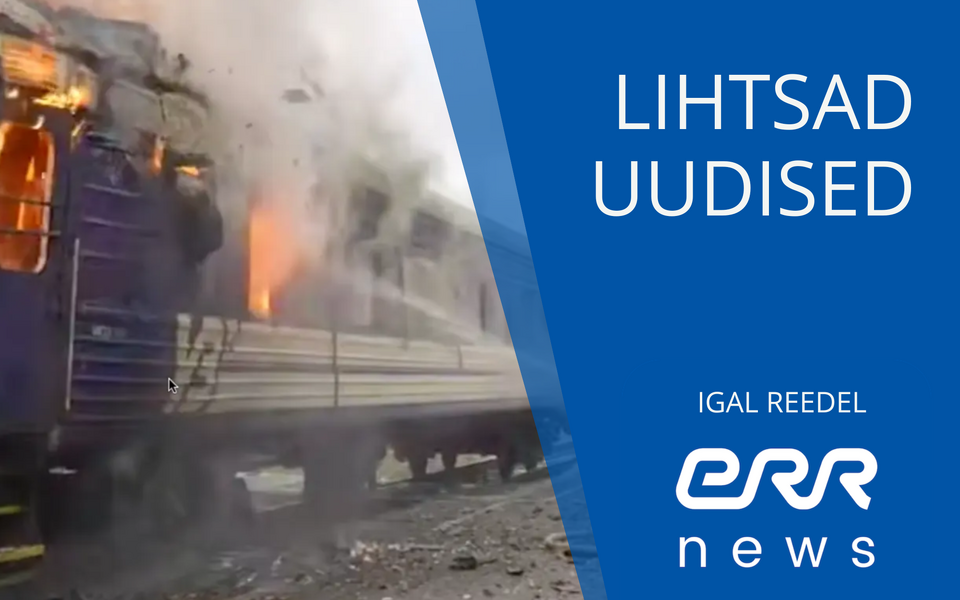
As early as 1883, Reuters taught what makes news: fires, explosions, train wrecks, destruction, suicides of important people, sensational and gruesome murders. Pretty grim. A softer version of that rule still fuels media success today, summed up in the phrase: "criticize, exaggerate and condense!" And if someone does happen to have a positive news story, they're usually advised to take it to the advertising department. Hypothetically.
A separate phenomenon in the shaping of media truth is the "main topic." Here [in Estonia], it's usually within the bounds of some new tax, the mayor of Tallinn or Anu Välba's talk show. In different countries, different things matter. I'm convinced that very few people have heard of Campi Flegrei. If we're lucky, we'll never hear about it — but if not, that name will conquer the world.
Campi Flegrei is an enormous volcano with massive potential power located directly beneath the city of Naples and it's shown signs of possible awakening in recent months. The ground is rising at an unusual rate, there are hissing and tremors — hundreds a day. If it gets serious, it will directly affect six million people and, really, the entire world.
Iceland is currently talking about lava building up beneath one of the world's top attractions, the Blue Lagoon. It's already been closed to visitors and it seems unlikely to resolve without a bang — the only question is how big it'll be.
In 2018, I met with journalists in Cape Town, South Africa, and they told me that there was only one topic there: water. The city's water crises have gotten so bad that people can't freely use the toilet or cook soup. In a situation like that, it's understandable that some war 5,000 kilometers away doesn't interest many.
So, there's no point in expecting absolute truth from the media. What we get is an emotional and selective picture of the world. But even so, it's extremely important and one of the key pillars of democracy. Journalists do a huge job for us by sorting through an avalanche of information and choosing what they believe matters most.
What can we do ourselves? Professor of biochemistry Mihkel Zilmer once said: "You are what you eat." If you constantly consume garbage, you'll eventually turn into garbage yourself. The same goes for mental nourishment. If you live on headlines and clickbait, you'll eventually turn into a walking portal.
With the rise of modern technology, the internet and artificial intelligence, two self-defense strategies have become unavoidable. First, we must educate ourselves and not live solely in the media's version of reality. Second, we must develop the ability to verify the information we're given. I repeat this and will keep repeating it. If you can't be bothered to do these things, don't be surprised by the results.
--
Editor: Marcus Turovski